FaceGuard Testing Guide
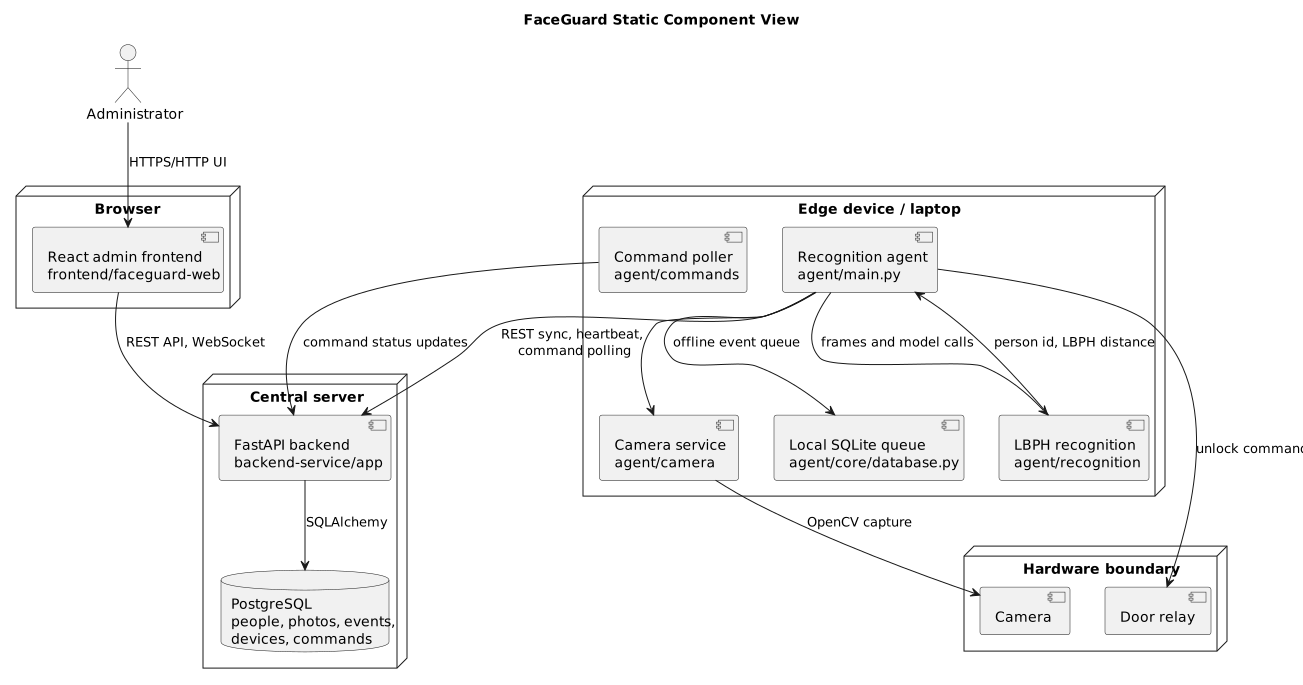
This guide documents the maintained testing baseline for the active
FaceGuard backend in backend-service and frontend in frontend/faceguard-web.
Testing Scope
- Backend unit tests for security helpers and schema validation.
- Backend integration tests for critical API contracts using FastAPI TestClient.
- Automated Quality Requirement Tests linked to measurable quality requirements.
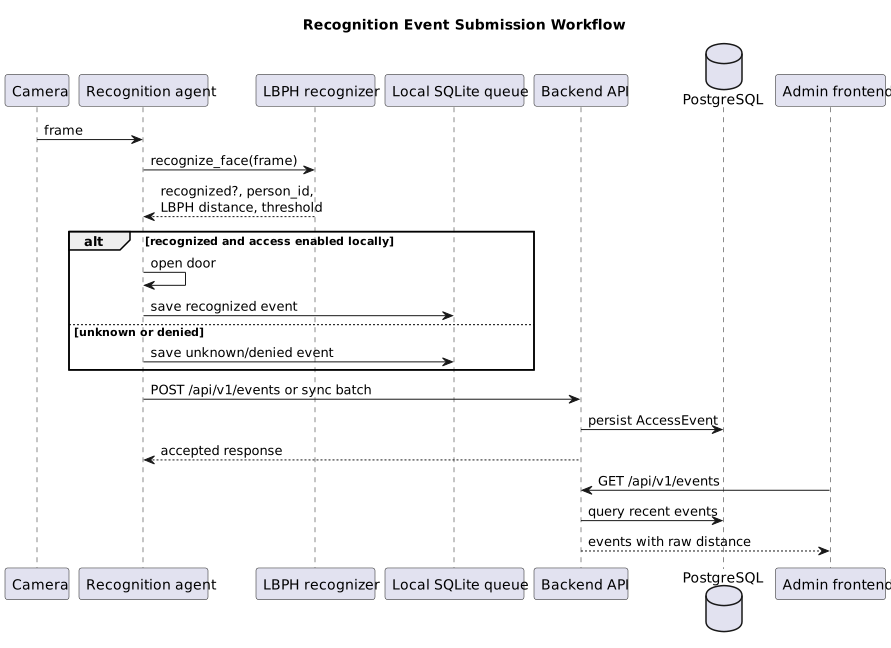
- Recognition-score threshold and display helper tests for MVP v2.
- Frontend production build verification.
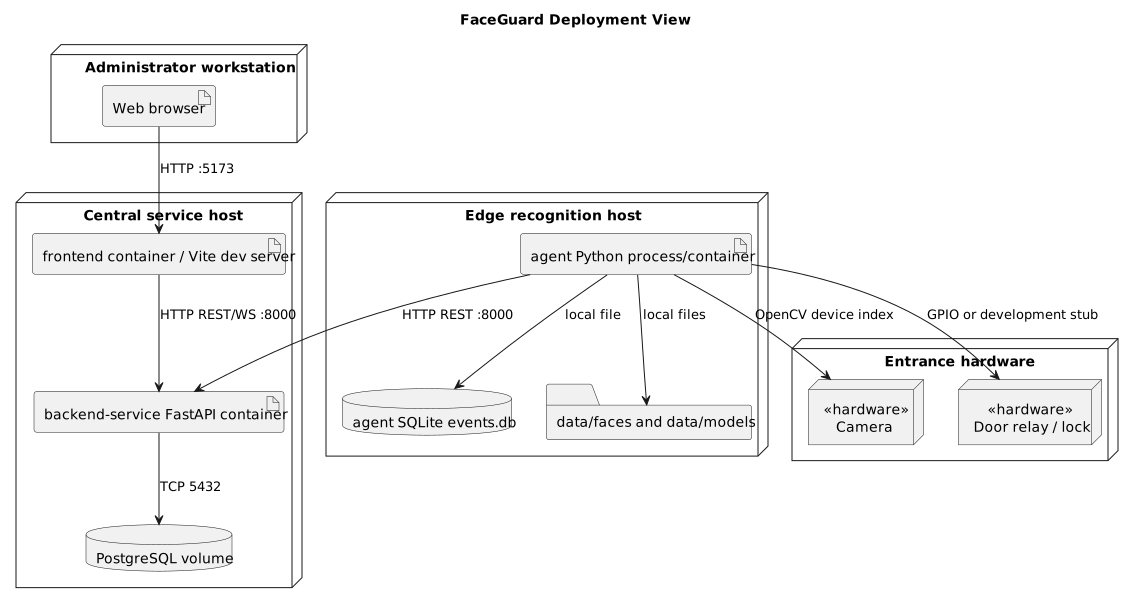
- Deployment configuration validation through Docker Compose.
- Agent syntax checks for the Raspberry Pi LED access-indicator path.
The tests do not require a physical camera, do not use production credentials, do not use biometric data, and the initial integration tests do not require a real PostgreSQL instance.
Unit Tests
Unit tests cover deterministic backend logic that can run without external services:
- password hashing and verification in
app/core/security.py; - JWT creation and decoding in
app/core/security.py; - person-name validation boundaries in
app/schemas/schemas.py. - recognition threshold semantics through the pure helper used by the agent.
Local command:
cd backend-service
pytest tests/unit -v
Focused Sprint 3 / Assignment 5 recognition-score command:
cd backend-service
pytest tests/unit/test_recognition_score.py -v
Integration Tests
Integration tests use FastAPI TestClient against the active backend app in
backend-service/app/main.py.
Current integration coverage:
GET /api/v1/system/healthresponse contract;GET /api/v1/auth/merejection when credentials are missing.
Local command:
cd backend-service
pytest tests/integration -v
Automated QRTs
QRTs are automated tests linked to documented quality requirements:
QRT-PERF-001verifies health endpoint p95 response time in process.QRT-SEC-001verifies invalid administrator identity rejection.QRT-USE-001verifies invalid person-name rejection and valid boundaries.
Local command:
cd backend-service
pytest tests/qrt -m qrt -v
Critical Modules and Coverage Threshold
Each critical module must independently meet the documented minimum line coverage. The 30% threshold applies separately to every critical module. Global repository coverage is not this threshold and must not be used as a substitute.
| Module | Minimum line coverage |
|---|---|
app/api/system.py |
30% |
app/core/security.py |
30% |
app/schemas/schemas.py |
30% |
Coverage command:
cd backend-service
pytest tests -v \
  --cov=app \
  --cov-report=term-missing \
  --cov-report=xml:coverage.xml \
  --cov-report=json:coverage.json
python scripts/check_critical_coverage.py coverage.json
Local Commands
Backend setup and checks:
cd backend-service
python -m pip install --upgrade pip
python -m pip install -r requirements-dev.txt
ruff check app/api/system.py app/core/security.py app/schemas/schemas.py tests scripts
pytest tests/unit -v
pytest tests/integration -v
pytest tests/qrt -m qrt -v
pytest tests -v \
  --cov=app \
  --cov-report=term-missing \
  --cov-report=xml:coverage.xml \
  --cov-report=json:coverage.json
python scripts/check_critical_coverage.py coverage.json
Frontend build:
cd frontend/faceguard-web
npm ci
npm run build
npm test -- --run
The frontend test command currently runs helper-level tests for recognition distance presentation. It does not launch a browser.
Deployment configuration validation:
docker compose -f backend-service/docker-compose.yml config --quiet
Agent LED indicator syntax smoke check:
python -m py_compile agent/core/config.py agent/door/door_controller.py agent/events/event_handler.py
This check validates that the customer-requested LED indicator code path parses correctly. It does not replace Raspberry Pi GPIO hardware validation.
CI Jobs
The .github/workflows/quality.yml workflow runs on pull requests and pushes to
main. It provides these visible jobs:
Frontend production buildBackend Ruff lintBackend tests and critical coverageQuality requirement testsFrontend recognition score testsDocumentation buildDeployment configuration validation
The existing Lychee workflow remains a link checker and is not counted as the Assignment 4 additional QA check.
Additional QA Check
The additional QA check is Docker Compose configuration validation:
docker compose -f backend-service/docker-compose.yml config --quiet
This verifies that the backend deployment configuration can be parsed by Docker Compose before merge.
Limitations
- FastAPI TestClient performance checks are in-process CI measurements, not production network benchmarks.
- The current integration tests avoid real PostgreSQL and do not validate database outage behaviour.
- Camera, recognition quality, and biometric matching are outside this automated baseline.
- Sprint 3 / Assignment 5 score tests do not cover agent reload behaviour, dataset versioning, WebSockets, concurrency, real-face recognition, or full browser flows.
- These tests do not replace security review or penetration testing.
- The LED indicator check is a syntax smoke check only; physical blue/yellow/red GPIO behavior must still be validated on Raspberry Pi hardware.
Maintenance Policy
- Keep QRT IDs stable once referenced from quality documentation.
- Update
docs/quality-requirements.mdanddocs/quality-requirement-tests.mdwhen a QRT changes behaviour or scope. - Add tests with every change to a critical module when behaviour changes.
- Do not reduce thresholds, remove critical modules, or disable CI steps only to obtain a green build.
- Do not commit generated coverage files, caches, credentials, biometric data, or private evidence.