Code Reference
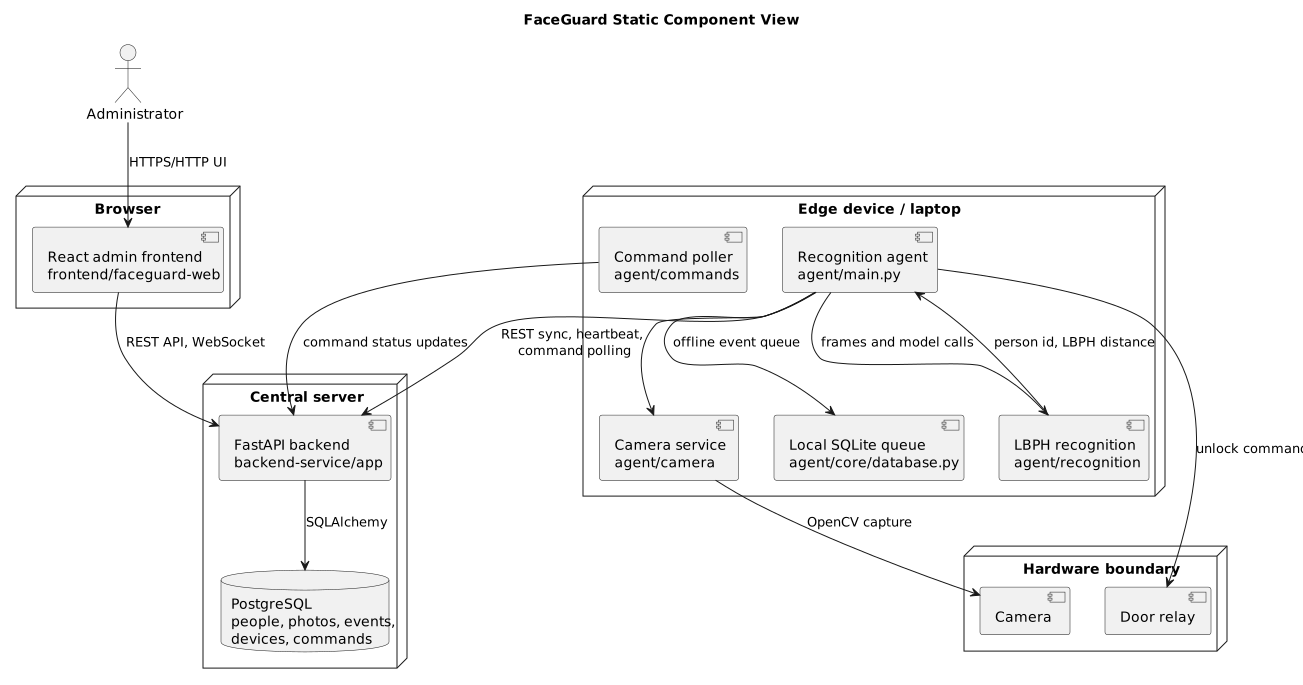
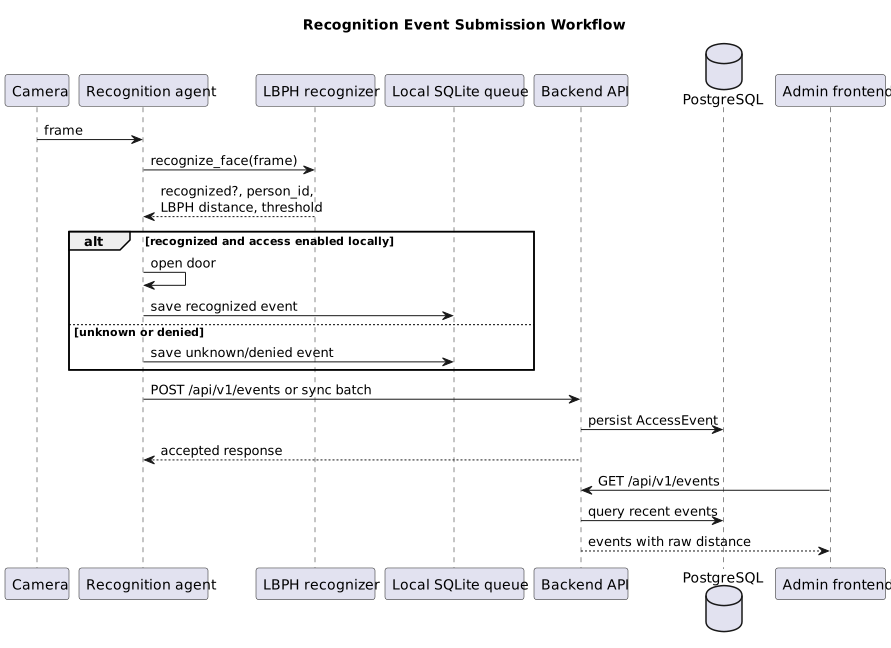
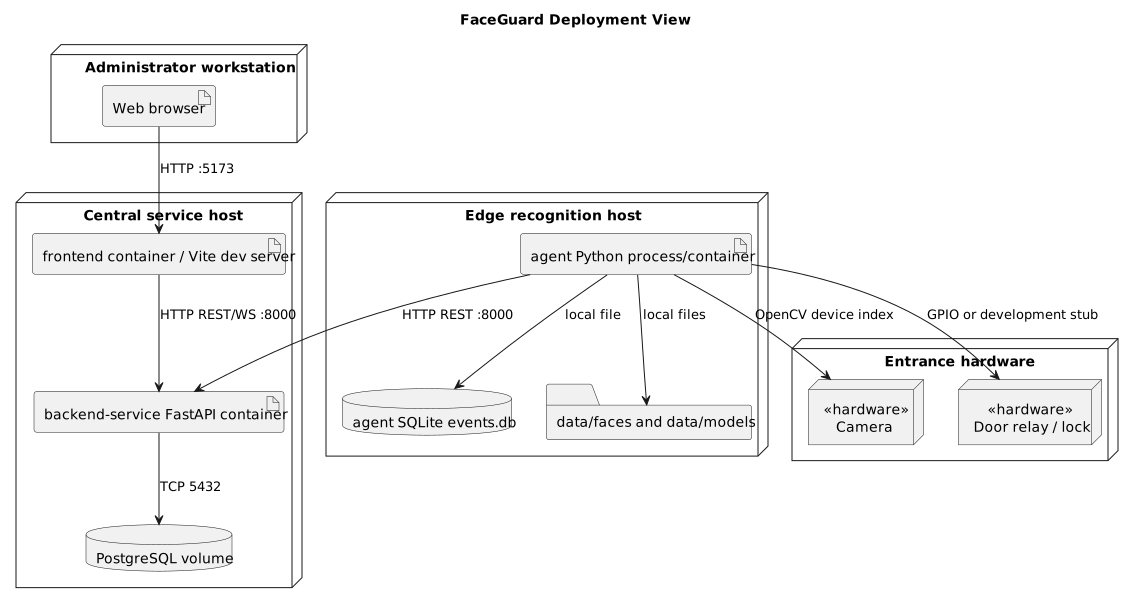
This page is a lightweight public code reference for the maintained FaceGuard modules. It is intentionally limited to stable entry points that are useful for handover, operation, and review.
Backend Service
| Module | Public entry point | Responsibility |
|---|---|---|
backend-service/app/main.py |
app |
FastAPI application setup and API router registration |
backend-service/app/api/system.py |
health endpoints | Backend liveness and status contract used by UI, CI, and smoke checks |
backend-service/app/api/people.py |
people endpoints | Authorized-person CRUD workflow |
backend-service/app/api/photos.py |
photo endpoints | Reference-photo upload and retrieval |
backend-service/app/api/devices.py |
device endpoints | Raspberry Pi/edge-device registration and heartbeat |
backend-service/app/api/events.py |
event endpoints | Recognition/access-event history |
backend-service/app/api/commands.py |
command endpoints | Backend-to-agent command queue, including model rebuild and manual open |
backend-service/app/api/sync.py |
sync endpoints | Bulk upload of offline events and telemetry |
backend-service/app/core/security.py |
JWT helpers | Administrator authentication boundary |
Recognition Agent
| Module | Class or function | Responsibility |
|---|---|---|
agent/main.py |
FaceGuardAgent.start() |
Starts camera, sync, command polling, recognition loop, telemetry, and stream server |
agent/main.py |
FaceGuardAgent.stop() |
Gracefully stops background tasks, camera, backend client, and hardware resources |
agent/camera/camera_service.py |
CameraService.get_frame() |
Returns the latest camera frame for recognition |
agent/camera/capture_service.py |
CaptureService.capture_person_photos() |
Captures enrollment photos for an authorized person |
agent/recognition/recognizer.py |
RecognitionService.train_model() |
Builds or rebuilds the local recognition model |
agent/recognition/recognizer.py |
RecognitionService.recognize_face() |
Runs face detection and recognition against the current frame |
agent/recognition/recognition_loop.py |
RecognitionLoop.start() |
Runs continuous recognition in a background thread |
agent/recognition/minifasnet_detector.py |
MiniFASNetDetector.detect_spoofing() |
Optional CNN-based presentation-attack detection |
agent/door/door_controller.py |
DoorController.show_granted() |
Emits the blue access-granted LED signal |
agent/door/door_controller.py |
DoorController.show_calibrating() |
Emits the yellow calibration/operator-attention LED signal |
agent/door/door_controller.py |
DoorController.show_denied() |
Emits the red denied/unknown LED signal |
agent/door/door_controller.py |
DoorController.open_door() |
Backward-compatible command handler that now emits the granted LED signal |
agent/sync/sync_manager.py |
SyncManager.add_event() |
Sends or buffers recognition/access events |
agent/commands/command_executor.py |
CommandExecutor.execute_command() |
Dispatches backend commands to local agent services |
Frontend
| Module | Responsibility |
|---|---|
frontend/faceguard-web/src/app/App.tsx |
Application shell and route rendering |
frontend/faceguard-web/src/app/routes.tsx |
Route definitions |
frontend/faceguard-web/src/app/components/pages/Dashboard.tsx |
Operator dashboard and metrics |
frontend/faceguard-web/src/app/components/pages/People.tsx |
Authorized-person management |
frontend/faceguard-web/src/app/components/pages/AccessLogs.tsx |
Recognition/access-event review |
frontend/faceguard-web/src/app/components/pages/LiveCamera.tsx |
Camera and device command UI |
frontend/faceguard-web/src/app/components/pages/System.tsx |
Service and device status view |
frontend/faceguard-web/src/services/api.service.ts |
Backend REST client |
frontend/faceguard-web/src/services/websocket.service.ts |
WebSocket integration |
frontend/faceguard-web/src/utils/recognitionScore.js |
Recognition-distance display helper |
Maintenance Notes
- Keep docstrings and this reference synchronized when public module names or responsibilities change.
- Do not expose private credentials, biometric data, model weights, or customer evidence in generated documentation.
- Add a new row only for stable code that a customer, TA, or teammate can use as an entry point.