FaceGuard Architecture
This package documents the current FaceGuard repository architecture for MVP v2. It describes implemented components only: a React administrator frontend, a FastAPI backend, PostgreSQL persistence, an edge recognition agent, local camera integration, and the command/sync APIs between the backend and agent.
Views
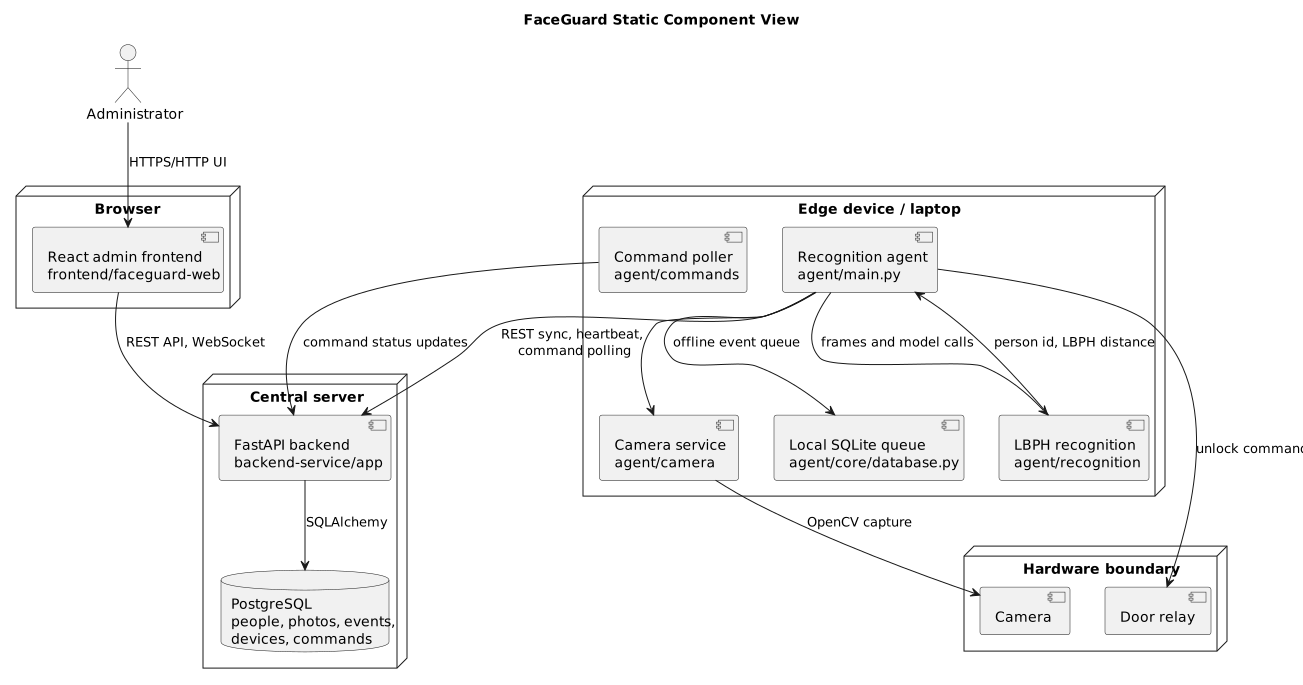
- Static component view with editable source in component-diagram.puml.
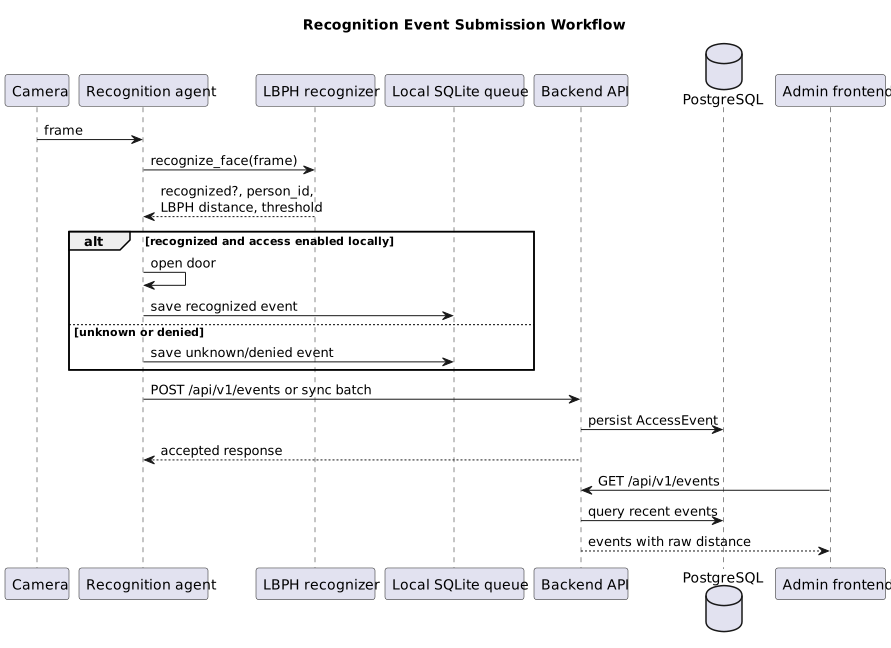
- Dynamic recognition workflow with editable source in recognition-workflow.puml.
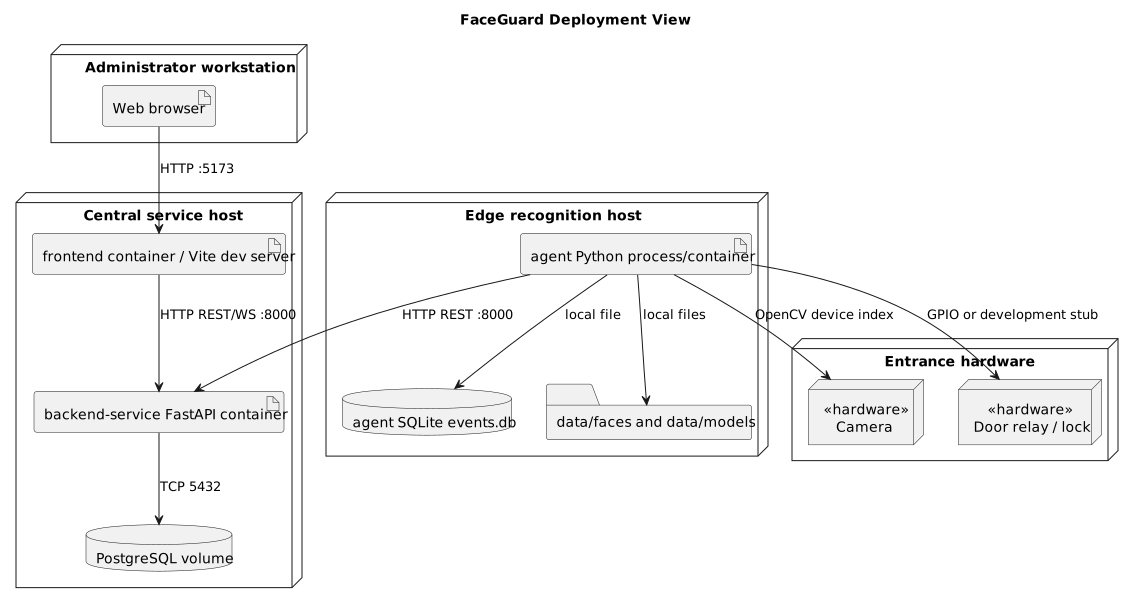
- Deployment view with editable source in deployment-diagram.puml.
Static View
The static view separates browser, central server, edge agent, and hardware
boundaries. The frontend has high cohesion around administrator workflows and
communicates with the backend through REST and WebSocket services in
frontend/faceguard-web/src/services. The backend owns persistence and API
contracts in backend-service/app. The recognition agent owns camera capture,
LBPH recognition, local event buffering, door control, heartbeat, and command
polling under agent.
The main coupling is intentional and boundary-based: the frontend depends on
backend API contracts; the agent depends on backend sync and command APIs; the
backend depends on database models. The riskiest coupling is the recognition
dataset boundary: web-uploaded photos are stored by the backend, while the
agent trains from local data/faces/{person_id}/processed files. That current
structure constrains maintainability for automatic model refresh and is tracked
by the Sprint 3 / Assignment 5 recognition-data work.
Relevant quality requirements: QR-REL-001, QR-USE-001, and QR-SEC-001.
Dynamic View
The dynamic view documents the recognition event workflow. The agent receives a camera frame, calls the OpenCV LBPH recognizer, interprets the returned score as raw distance where lower is better, stores an event locally, and submits it to the backend. The frontend then reads persisted events from the backend and displays the raw match distance.
This workflow crosses hardware, edge software, backend persistence, and administrator UI boundaries. It supports auditability because events are persisted centrally and buffered locally, but it is constrained by current agent/backend data synchronization for model rebuilding.
Deployment View
The deployment view shows the reproducible model used by the repository: frontend and backend run as central services, PostgreSQL stores shared state, and the recognition agent runs on a host connected to a camera and door relay or development stub. This model is appropriate for MVP work because camera and door access are local hardware concerns while administration and audit data are centralized.
Operational concerns are explicit:
- the administrator access path is browser to frontend to backend;
- the edge agent needs backend connectivity for sync, heartbeat, and commands;
- local SQLite and
data/faces/data/modelspreserve edge state; - biometric data and private access instructions must not be committed.
ADR Index
- ADR-001 - Backend integration boundary
- ADR-002 - Recognition score semantics
- ADR-003 - Central server and edge agent
Together these ADRs explain why FaceGuard keeps the backend as the contract and persistence boundary, why LBPH output is treated as distance rather than probability, and why hardware recognition remains on an edge host.