Development Process and Configuration Management
This document is the maintained source of truth for the FaceGuard development workflow and public configuration rules.
Backlog and Planning
The Product Backlog is maintained in GitHub Issues and the organization Project. Sprint scope is represented by a Sprint milestone, while SemVer releases represent published increments after review and CI evidence exist.
Every ready Sprint PBI is expected to have:
- expected outcome;
- acceptance criteria;
- Story Points;
- implementer;
- different reviewer;
- Work Status;
- Sprint milestone.
Sprint 3 MVP v2 PBIs are tracked by:
- #59 - PBI-A5-ARCH
- #60 - PBI-A5-PROC
- #61 - PBI-A5-QA
- #62 - PBI-A5-DELIVERY
- #35 - BUG-01: Recognition agent requires restart after authorized-person changes
- #58 - BUG-02: Recognition confidence is displayed in reverse
Work Status Flow
The GitHub Project Work Status is the public planning state. The usual flow is
To Do -> In Progress -> In Review -> Done. An item stays open when
required CI, independent review, customer evidence, release evidence, or
deployment evidence is missing.
Branches, PRs, and Review
Branches are issue-linked and focused. Current Sprint 3 / Assignment 5 branch names are:
docs/a5-architecturedocs/a5-development-processqa/a5-mvp-v2docs/a5-delivery
Pull requests must link the issue, describe acceptance-criteria coverage, list validation results, request the assigned independent reviewer, and merge only after required checks pass. The team does not self-approve PRs.
gitGraph
    commit id: "Protected main"
    branch issue-branch
    checkout issue-branch
    commit id: "Implement acceptance criteria"
    commit id: "Add tests and docs"
    checkout main
    merge issue-branch id: "Reviewed PR + passing CI"
    commit id: "SemVer release from main"
The graph shows the intended repository path: main remains protected, focused work happens on an issue branch, tests and documentation travel with the change, review and CI gate the merge, and releases are created from main after merge.
Definition of Done
The active Definition of Done is maintained in definition-of-done.md. It requires issue-linked PRs, independent review, green CI, relevant tests, updated documentation, changelog entries, public/private evidence separation, and release/deployment evidence when applicable.
CI and Quality Gates
The maintained quality workflow includes:
- frontend production build;
- frontend recognition-score helper tests;
- backend Ruff lint;
- backend tests with coverage and critical-module coverage check;
- automated Quality Requirement Tests;
- Docker Compose configuration validation;
- strict MkDocs documentation build.
Assignment 4 gates remain active and must not be weakened to make later work pass.
Release and Changelog
User-visible changes are recorded in
CHANGELOG.md.
Releases are SemVer tags prefixed with v and are created from protected
main only after selected changes are merged and required evidence exists.
If deployment, UAT, Sprint Review, or protected-main CI evidence is missing,
the release remains Pending.
Configuration Management
Frontend
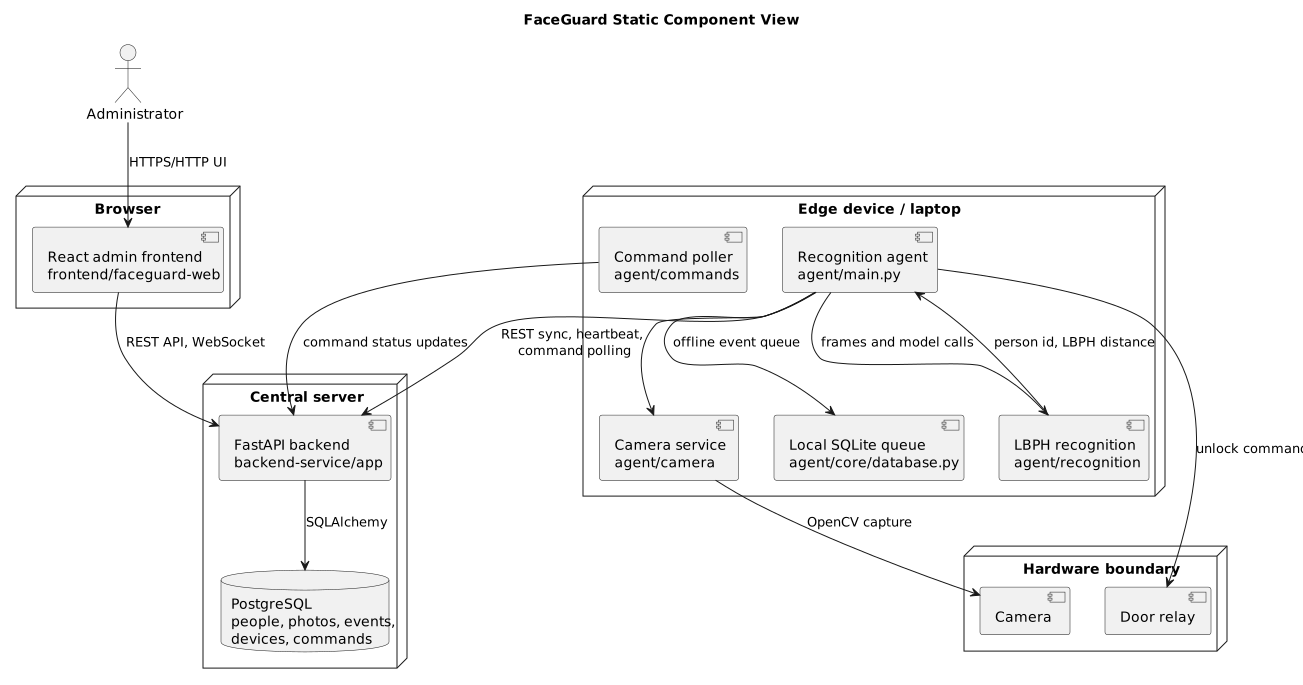
The frontend lives in frontend/faceguard-web. It is built with Vite and reads
backend API settings from public development configuration. It must not expose
device-agent API keys, private deployment credentials, or customer data.
Development commands:
cd frontend/faceguard-web
npm ci
npm run build
npm test -- --run
Backend and Database
The backend lives in backend-service. Docker Compose starts the backend and
PostgreSQL for local development. Persistent database data is managed through
Compose volumes and Alembic migrations.
Development commands:
cd backend-service
python -m pip install -r requirements-dev.txt
ruff check app/api/system.py app/core/security.py app/schemas/schemas.py tests scripts
pytest tests -v
pytest tests/qrt -m qrt -v
docker compose config --quiet
Recognition Agent and Hardware
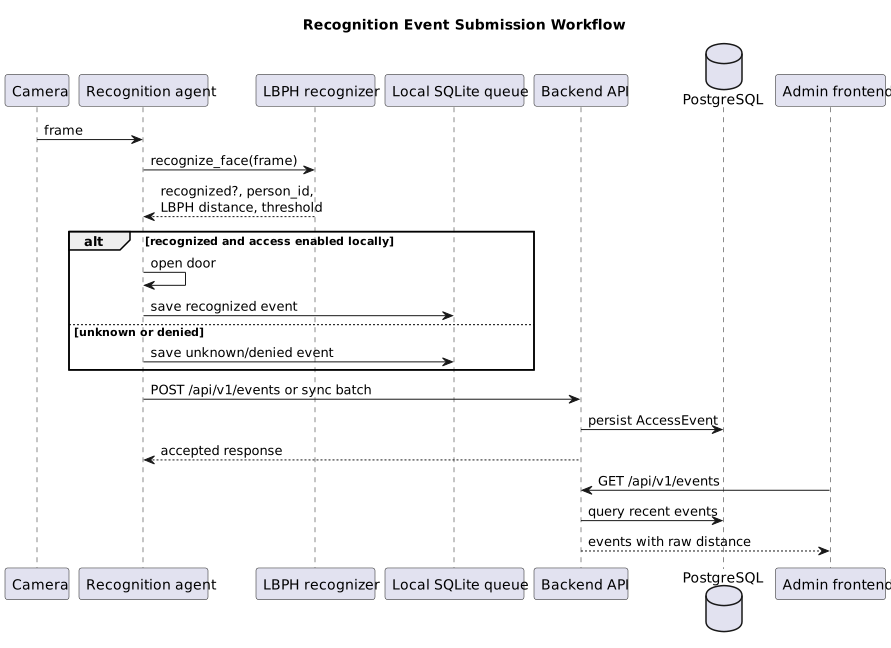
The agent lives in agent. In development it can use HARDWARE_MODE=development
and a local CAMERA_INDEX. The agent owns local SQLite buffering and local
recognition data under agent/data or configured runtime paths. The repository
must not contain generated biometric datasets, private camera images, or
customer-specific credentials.
Ports and Persistent Data
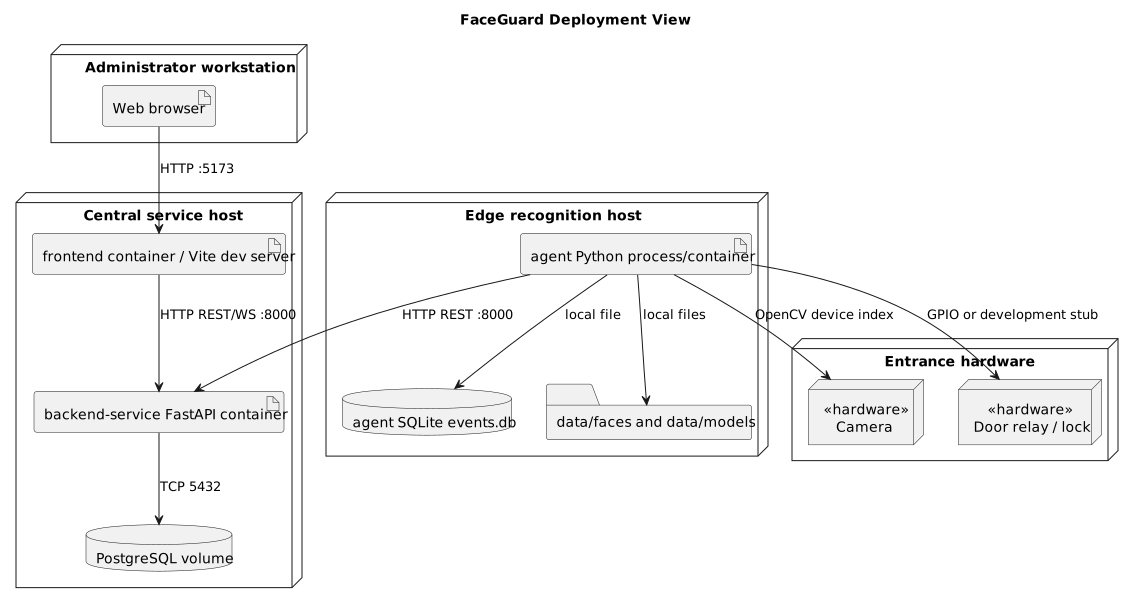
Common local ports are:
| Component | Default local endpoint |
|---|---|
| Frontend | http://localhost:5173 |
| Backend API | http://localhost:8000 |
| PostgreSQL | localhost:5432 through Compose |
Persistent data includes PostgreSQL volumes, agent SQLite queue files, uploaded photo storage, and agent face/model artifacts. Backups and rollback plans must cover database state and any runtime recognition dataset before production-like changes.
Public and Private Evidence
Public repository evidence may include issue/PR links, sanitized reports, screenshots that do not expose credentials or customer identity, and validation commands. Private Moodle evidence may include recording links, exact private timecodes, consent evidence, private access instructions, and limited test credentials. Private evidence must not be committed.